“Want me to go in with you?”
Lamar gave a slight shrug. Not from being unsure of his answer, but from the way the seatbelt chafed against his neck. They had sat in the parking lot, he and Ivette, for five minutes, and he still hadn’t taken it off yet.
It felt as if he were dreaming, Ivette’s voice calling to him from across the world. But he couldn’t shake off the dream, however hard he tried.
“No,” he said, undoing the buckle. “It’s all right. I’ll be back in a few.”
She nodded. “I’ll be here,” she said after a moment. “Waiting.”
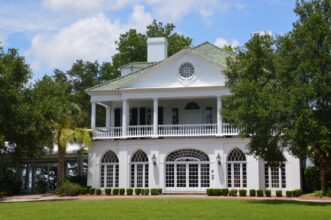
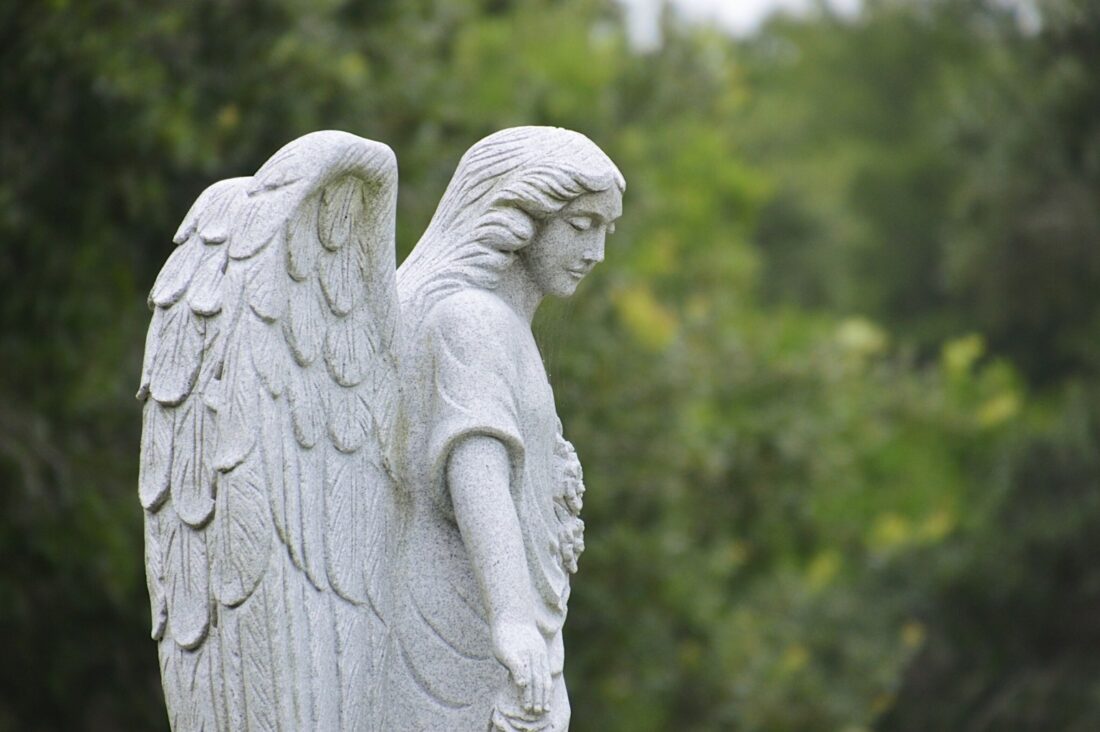
He stepped out of the car and approached St. Francis. His eyes swept over the hospital’s sign, the dated block letters, the statue of the saint. The flower garden to either side of the doors, brimming over with bright zinnias, asters, impatiens, and white caladiums. He blinked, noting the series of arched windows flanking the door. It reminded him of Laurel Oak. He hadn’t noticed that before, the night when Devin and Dr. Holbrooke were first admitted.
It brought to mind again the strangeness of holding a wedding on a plantation, the dissonance between the site and its past and the mood of those gathered in celebration. In a way it was fitting that the shadow had risen to claim its tithe of white folks—though it had nearly claimed him, too. If not for Devin.
He still had mixed feelings about that. Her apology was not nothing, and he was grateful she had stepped between him and the shadow. On the other hand, it was Holbrooke’s racist drama, and her casual exploitation, that had put him in its sights in the first place.
He remembered little afterward of that night. His memory was blurred, flashes of scenes he couldn’t fit in order. Ivette driving him here behind the ambulance, beautiful despite the stress of the moment in her yellow dress and coiled box braids. Sitting in the waiting room beneath a muted TV, splitting a hospital café sandwich with her. The doctors finally coming out, listing the bad things they’d found in the victims’ bloodstreams: PCBs, PAHs, PFCs, DDT. High mercury levels. Heavy metal poisoning.
“What we don’t understand is how they both have exposures to high concentrations like this.”
Lamar had said nothing to that. What could he have said?
They had pumped Devin’s and the doctor’s stomachs to rid them of the mercury, and were flushing heavy metals from their bodies even now. Phrases like “lasting damage for years,” “possible tumors,” “may be irreversible” still rung in his head, mostly in reference to Dr. Holbrooke. Devin, fortunately, seemed to have been spared the brunt of it.
He had waited for days, nerves frayed in anticipation, for news on her condition. It had only come early this morning.
He walked the hospital stairs and halls on autopilot, his body somehow recalling the exact corridors to take to find her room. He knocked at her door. Sunlight poured over her dark hair as her eyes lifted, took in her visitor. Her face looked pale.
“Come on in,” she said, voice strained.
He stood at her side. They gazed at each other a long moment, each unsure what to say. His eyes lit for a moment on flowers by the windowsill, and he forced himself to look back at her.
“What happened?” she asked.
His brow furrowed. He had never seen her so uncertain, so shaken, even that first day when he’d met her on the creek.
“You collapsed,” he began. “On the dock at Laurel Oak. They brought you here. You’ve been out for a week or so.”
“A week…” Her eyes went glassy, then snapped back to alertness. “That thing—”
“Gone,” he answered. “Went all light and misty, then slipped away. Toward the river.”
He tried to read Devin’s face. She seemed to be struggling to remember.
“I’ve been taking care of Hilo. Walked him every morning, fed him twice a day.”
“Thanks, Lamar,” she said. “Really. Thank you.”
He nodded, smiled.
“Dr. Holbrooke,” she asked. “Is he…?”
“They don’t know.” He rubbed his forehead. “He still ain’t awake. He might be in a bad shape for a while.”
“Then I guess I was lucky.”
“Yeah. Guess you were.”
“Listen, I have to tell you something,” Devin said. Her voice grew low. “I keep trying to remember…all the things…the art walk, the painter. The wedding. The Leefairs, how I let them down.”
“Devin, please. Don’t worry about that—”
“No, listen. Please. All of those things…and then, at the bottom of everything, the words Dr. Holbrooke said…on the dock…about…us.”
Lamar blinked. Somehow he’d forgotten about that. “It’s okay,” he said. “You don’t have to worry about it. It’s all right.”
Her brow furrowed. She gazed at him, searching the depths of his eyes, wondering. At last she gave a nod, though she still looked conflicted.
Suddenly she seemed sleepy. She blinked, each time taking longer to open her eyes again.
“Well,” he said. “I’ll come back when you’re feeling better. Text me anytime.”
“I will,” she murmured, eyes already closed.
Lamar stepped toward the door, unwilling now to leave. He felt pulled to her side, drawn by the gravity of her need, though he knew she would be fine in his absence. With great effort he turned his back to her and left her alone, footsteps echoing in his ears as he strode the empty hall toward the stairwell.
* * *
After the hospital, Ivette took him out for lunch. Since they were already near the west edge of town they headed to Ed’s Diner, where both ordered soft shell crab and red rice. On the neon sign outside, the last remaining R flickered. Lamar smiled, wondering when it would go out.
“You think she’ll be okay?” Ivette asked.
“I don’t know. Hope so.”
“Yeah. Feel up to a beer?”
“Yeah. No. I don’t know. You go ahead and order one, though.”
She did. Soon the waitress brought a Blue Moon with an orange slice, and he found himself wishing he’d ordered one after all. He could smell the crab frying in the kitchen from here, and his stomach twisted in anticipation. He grinned at Ivette.
The overheard speakers trailed off and new music faded in, a Valerie June song he’d heard once before. Ivette’s head tilted. She smiled.
“Come on up,” she said, standing. She offered a hand. Lamar looked at it, then searched her eyes. “Come on,” she said again. “It’ll be fun.”
So he rose and took her waist, and they swayed to the warm, slow music. “See?” Ivette said. “I told you so.”
“Mmm,” Lamar sighed. He laid his head on her shoulder, tired.
“It’s okay,” Ivette murmured. “You don’t have to worry. It’s all right.”
He almost missed a beat, hearing those words—the same ones he’d spoken to Devin at the hospital. He lifted his eyes to hers again, and she nodded, lips parted slightly.
For a moment it was too much. Being here again, the place where everything that had come between him and Devin had first been defined, by seeing that painting. Maybe his father was right in forbidding him from ever coming here—though he still had no idea why. Would things have been different if they had gone somewhere else? To a taco truck, maybe, or for Vietnamese? Would they have been closer without all those distractions? Or would Devin have ever needed him at all without their search for answers?
He shook his head. Maybe she had been using him, but that wasn’t the extent of what they shared. The connection they had.
He couldn’t lay a finger on exactly what it was he felt. Not sadness, exactly. Nor anxiety. Not anymore. He knew he should be freshly scarred, seeing the shadow in the marsh again, but for some reason he wasn’t. It was still out there, he knew, in the creeks and rivers of the Lowcountry, mingling with the shadows of green things grown long and tangled in the overbearing heat.
Yet something told him he would not see it again. That it would trouble him no longer. There was relief in that, but it wasn’t satisfying. Numbing, maybe. He had glimpsed something new in it this time: perhaps not a kinship, but an understanding. There was blood in it. Iron and water, earth and suffering. Lamar could not tell which were the good parts and which were the bad, if indeed any of it were either. Or if there was anything to all of that beyond raw impressions.
But still the taste of righteous anger lingered, like blood in his mouth, and he knew.
He danced with Ivette. The song ended, and they sat again, still waiting for their food. It would come soon enough. In the meantime his thoughts wandered out the diner’s door, past the failing sign, and went on—beyond the gravel lot, over mounds of wasted oyster shells, and followed the highway. Down, far far down the narrow pine-lined lanes, miles and miles up Sixty-one.